
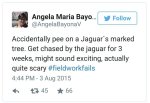
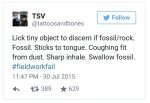



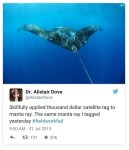




goddamn nerd






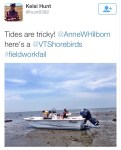

Guys, if you haven’t checked out the twitter #fieldworkfail tag yet, you probably should!
Left my clothes drying on the line overnight.
Woke up to baboons fighting over my braI work with a marine turtle project in Barbados and tagging nesting females is a massive part of our effort. It wasn’t me (seriously!) but someone applied tags to a new female upside down.
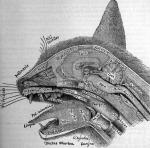
The Tongue of the Cat
Have you ever wondered why your cat’s tongue is rough and bristly, and feels like sandpaper on your skin?
The papillae that extend from the central region of the tongue are encased by keratin, and form tiny, backward-facing barbs, which help your cat (and all cats!) scrape meat from bones, and comb detritus from fur. The Felidae are obligate carnivores, and in the wild, must get as much nutriment from each fleshy meal as possible; many wild cats have a less than 15% success rate for hunts, so getting as much as possible out of each kill is critical.
Felines also use their tongue for grooming. There are many types of grooming, but one of the primary reasons is obviously to clean themselves. As very few wild cats are the top of their local food chain (or prefer to remain as invisible as possible), obliterating any scent of a previous kill is critical. They also groom to cool off via evaporation, and during stressful situations, as a form of self-comfort or compulsion.
Did you know that your cat can’t taste sweets? Their copies of the genes that create the receptors for sugars are non-functional, and as such they can’t pick up that taste. When cats develop a habit of eating foods that we perceive as sweet, they’re after the underlying taste.
But don’t fret for your cat’s lost taste sensation! Unlike us, and most other mammals, felines can taste ATP! Yes, adenosine triphosphate, the substance that creates energy in all cells. The levels it’s present at are fairly low, even in the most blood-soaked muscles, but kitties can pick it up at miniscule amounts. When they can’t make their own kills, being able to detect the taste of ATP in foods they find is critical!
Anatomical Technology as Applied to the Domestic Cat. Burt G. Wilder and Simon H. Gage, 1886.
Cat Tongue: Science To Life


 Waiting for Winter