A Swedish woman hitting a neo-Nazi protester with her handbag. The woman was reportedly a concentration camp survivor. [1985]
Volunteers learn how to fight fires at Pearl Harbor [c. 1941 – 1945]
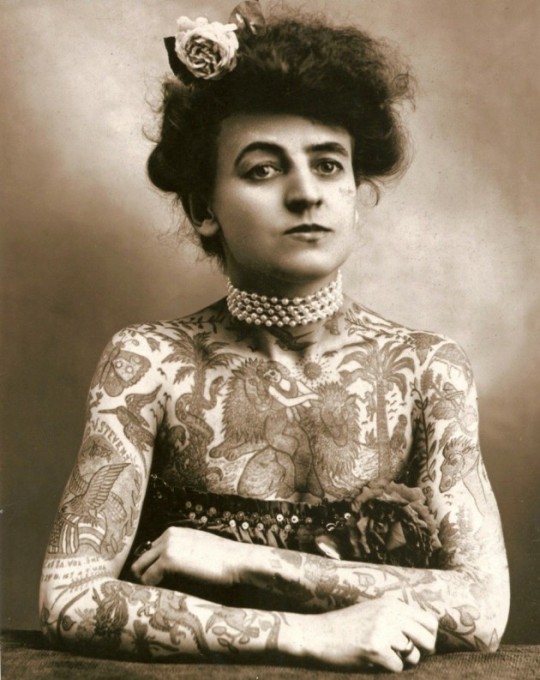
Maud Wagner, the first well-known female tattoo artist in the U.S. [1907]
A 106-year old Armenian woman protecting her home with an AK-47. [1990]
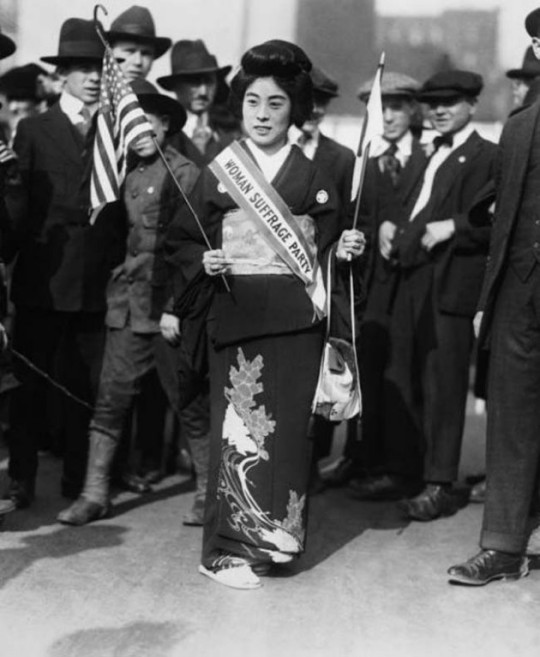
Komako Kimura, a prominent Japanese suffragist at a march in New York. [October 23, 1917]
Margaret Hamilton, lead software engineer of the Apollo Project, standing next to the code she wrote by hand that was used to take humanity to the moon. [1969]
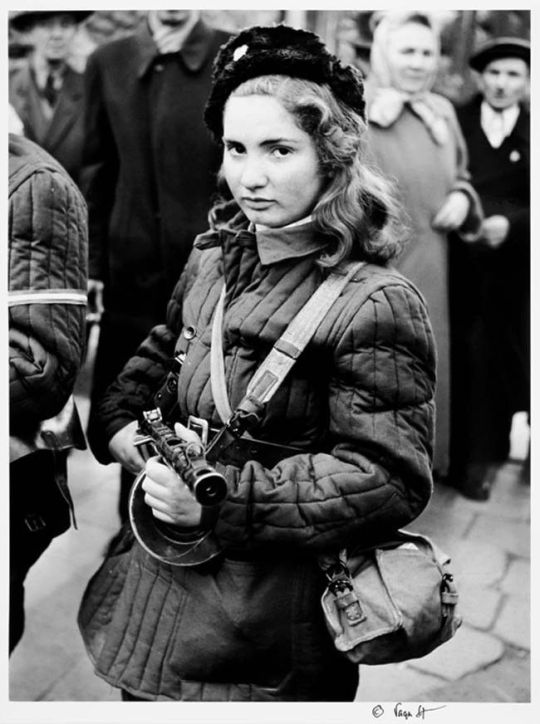
Erika, a 15-year-old Hungarian fighter who fought for freedom against the Soviet Union. [October 1956]
Sarla Thakral, 21 years old, the first Indian woman to earn a pilot license. [1936]
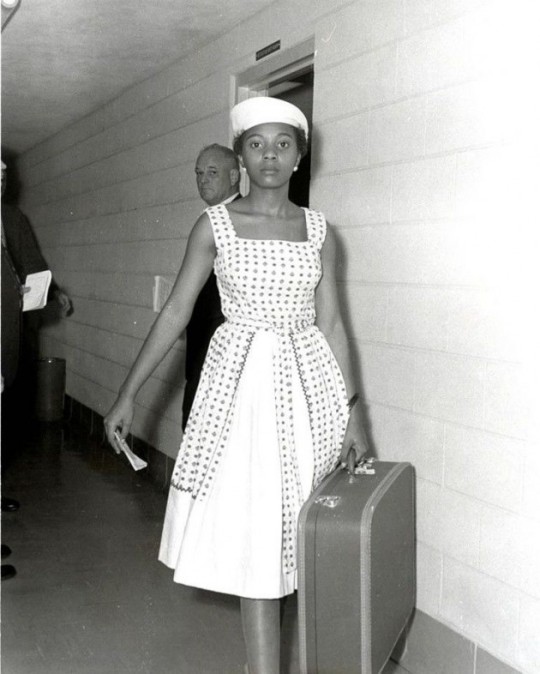
Voting activist Annie Lumpkins at the Little Rock city jail. [1961] (freakin’ immaculate)
Now with more awesomesauce!
Female pilots leaving their B-17, “Pistol Packin’ Mama” [c. 1941 – 1945]
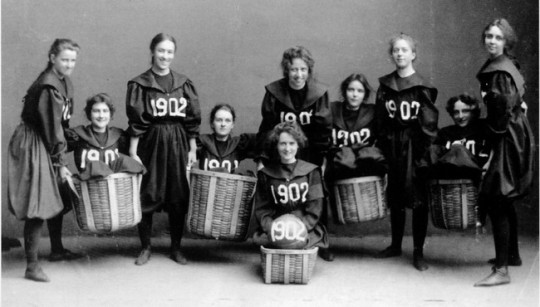
The first basketball team from Smith college. [1902]
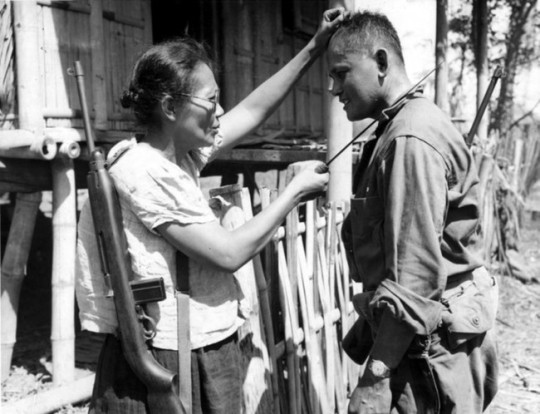
Filipino guerilla, Captain Nieves Fernandez, shows a US soldier how she killed Japanese soldiers during the occupation. [1944]
Afghani medical students. [1962] (man, screw fundamentalism.)
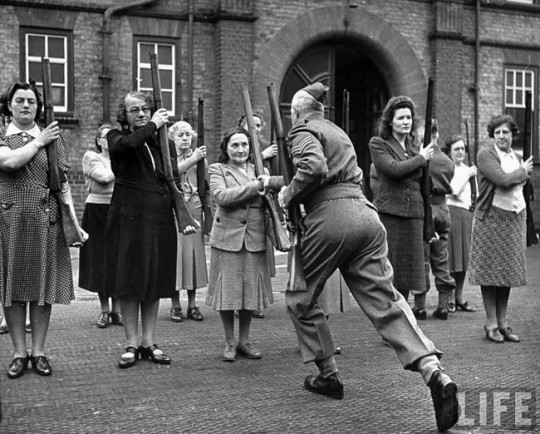
A British sergeant training members of the ‘mum’s army’ Women’s Home Defence Corps during the Battle of Britain. [1940]
and just to wrap up…
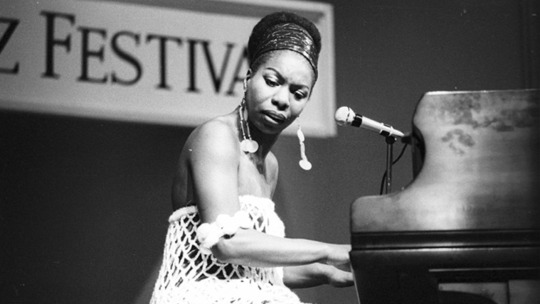
Nina Simone, one of the most talented vocalists of the 20th century.
Emily Temple-Wood, a biology major at Loyola University, started WikiProject Women Scientists in 2012 in an attempt to combat the sweeping underrepresentation of women in the annals of scientific discovery.
The trolls soon descended, but instead of retaliating in kind, Temple-Wood and the followers she’s acquired write a biography on a woman who’s made a valuable contribution to science for every hateful message she receives. It turns out, her efforts are desperately needed.
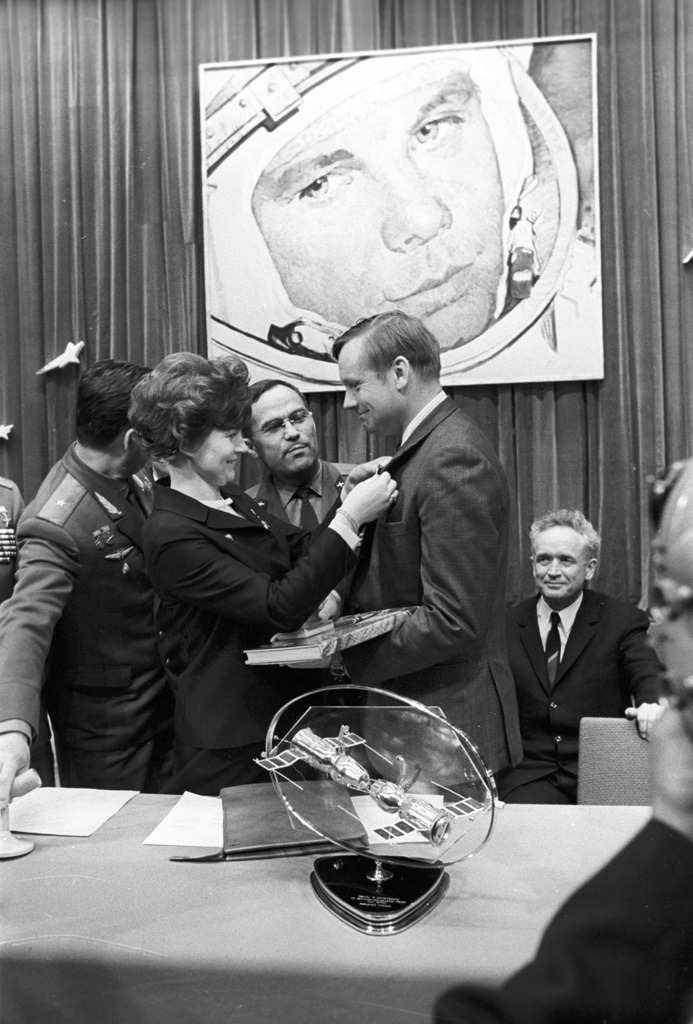
Hero of the Soviet Union Valentina Tereshkova, first woman cosmonaut in the world and USSR Pilot Cosmonaut (b. 1937), presenting a badge to U.S. astronaut Neil Armstrong in memory of his visit to the Gagarin Cosmonaut Training Center in Star City.
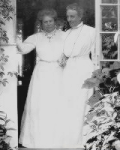
Boston marriages – romantic unions between women that were usually monogamous but not necessarily sexual – flourished in the late nineteenth century. The term was coined in New England, around the time that numerous women’s colleges such as Vassar, Smith, and Wellesley emerged.The concept of love between women was, of course, not new; “Boston marriage” and the very similar, earlier nineteenth-century term “romantic friendship” connote a type of relationship that dates back to at least the Renaissance in the West, and possibly further in the non-Western world. Boston marriages signified a new phenomenon, however, in that the women involved in them tended to be college-educated, feminist, financially independent, and career-minded – hardly the social norm among females of the day. These characteristics distinguish women bound together in Boston marriages from participants in the earlier romantic friendships.
Boston marriages were long-term and committed, and resembled traditional marriages in many ways. But remaining unattached to men gave women a chance to attain significant decision-making power over their own lives, power they would have forfeited to their husbands in a conventional marriage.The social acceptance of the Boston marriage was predicated upon the common assumption that the women involved did not practice any form of genital sexuality with each other. At the time, sexologists had not begun the regular use of pejorative terms such as “sexual inversion” and “perversion” to decry homosexuality, and the term “lesbian” was not yet in popular usage. Since nineteenth- and early twentieth-century women were often considered not to have strong sex drives – sex for them was supposedly a duty, and intended for procreation only – nothing was deemed wrong with women’s public displays of affection. Neither were their sharing households and even beds considered suspicious.Whether women in these romantic relationships did indeed refrain from sexual contact with each other is difficult to determine, but it is very likely that some, if not all, of Boston marriage couples were physically as well as emotionally involved. Their love letters to each other often indicate a passion that could hardly be considered platonic, and modern lesbian historians and writers have speculated that if members of Boston marriages were alive today, they would openly identify as lesbian.
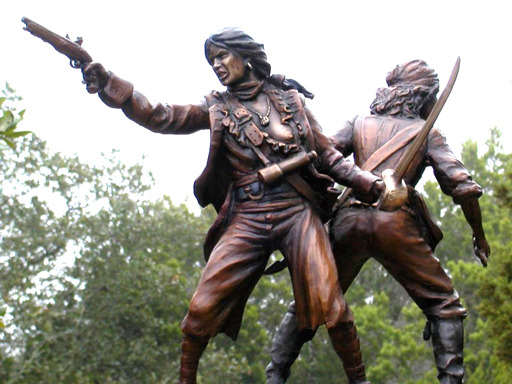
“Anne Bonny and Mary Read were pirates, as renowned for their ruthlessness as for their gender, and during their short careers challenged the sailors’ adage that a woman’s presence on shipboard invites bad luck.”
I’m not entirely sure that the statue really needed to have a tit out.
How dare women try to have nipples.
Actually I’ve seen this before and I can tell you— it’s because these women were bad ass pirates and when they killed someone they’d expose one or both breasts so that when their victim died, (s)he knew that they were killed by a woman.
ACTUALLY Anne Bonny purposely wore loose fitting clothes and displayed her breasts openly at all times during battle – mainly because men were distracted by them, and she took pleasure in killing said men while they were too busy staring at her breasts. Mary Read dressed mainly as a man (after posing as her deceased brother, Mark, for the entirety of her childhood) and both ladies cross-dressed from time to time, hopping between ships. They were known as the ‘fierce hell cats’ due to their ferocious tempers, and were key elements to Captain ‘Calico Jack’ Rackham’s crew – they were the only two known female pirates in the Golden Age of Caribbean piracy. IN FACT, when the ship was captured by the British Navy, Anne and Mary were the ONLY TWO pirates who fought while the males of the crew hid – they were all tried to be hung as pirates but Bonny and Read were both pregnant and were pardoned.
Calico Jack was a lover to Bonny, and as he was to be hung, Bonny’s final words to him were, “Had you fought like a man, you need not be hung like a dog.” Bonny and Read were possibly two of the most badass fucking pirates and they were FEMALE. The more you know.
And on top of all that, exposed breasts have a long and storied history of symbolism in art. They mean all sorts of things. The sculptor may have chosen to expose her left breast specifically to denote her courage–her heart is exposed–or to evoke comparison to Amazon warriors, who cut off their right breasts.
All sorts of tools have been found in pre-Christian women’s graves. The only major craft which seems to have been restricted to men only was Blacksmithing. […]
Here are a few examples of jobs done by women in the medieval period: brewer, laundress, barrel and crate maker, soap boiler, candle maker, book binder, doll painter, butcher, keeper of town keys, tax collector, shepherd, musician, rope maker, banker, money lender, inn keeper, spice seller, pie seller, woad trader, wine merchant, steel merchant, copper importer, currency exchanger, pawn shop owner, lake and river fisherwoman, baker, oil presser, builder, mason, plasterer, cartwright, wood turner, clay and lime worker, glazier, ore miner, silver miner, book illuminator, scribe, teacher, office manager, clerk, court assessor, customs officer, porter, tower guard, prison caretaker, surgeon and midwife. […]
There are records of women traders in 1205 in Genoa, Italy. In fact, 21% of people involved in trade contracts there in the 13th Century were women. Women also provided 14% of capital in seafaring ventures at the time. Even earlier, in the 12th Century, there are records of women traders in Georgia, Eastern Europe. Paris tax registers for 1292, 1300, 1313 list lots of craftswomen, many of whom were in different trades to their husbands. […]
Girls might be educated at home, with private tutor, or at a Convent. There were also schools within towns. In some cases girls were excluded from these, or only allowed to enter elementary schools. In other cases they were allowed to enter secondary schools and obtain a much broader education, including Latin and other languages. Some schools were mixed, others were single sex. Town Councils and the Church had some control over schools and over the appointment of teachers. In 1388, a Jewish woman, Sarah of Gorlitz, donated a property to be used as a school for Jewish children.
Outside of the Guilds, women might be employed as unskilled labourers in vineyards, on building sites and so on. Many more women than men were employed because they could be paid less for doing the same work. In Wurzburg, 1428-1449, for example, there are records of 323 female building site workers, paid 7.7 pfennings a day, and 13 male building site workers, paid 11.6 pfennings a day. In general, it seems that a wide range of professions were open to medieval women, although they were also subject to a variety of restrictions.




















 Waiting for Winter