military worship in this country is out of fucking control
excuse me?
military worship in this country is out of fucking control
Yea you’re right, we shouldn’t honor the people willing to risk their life to save ours and defend our country … oh
Military worship in this country is out of fucking control
I’m in the military and yes it’s out of fucking control. Most of the people I know in the military feel the same way. You civilians need to calm the fuck down. Most of us joined in our teens or early twenties. For a lot of us it was because we needed a job, and we didn’t see any other options, and this job has good benefits, especially for an uneducated young person in America. We get healthcare and education!! That’s some tempting fucking fruit. But this is a JOB. Some people in the military become heroes, that’s true. Jumping on grenades, defusing bombs, dragging a wounded person from the middle of a firefight. They usually end up dead in the process. Those people deserve respect, in my opinion. They give their lives for their friends, no matter whether or not you agree with the policies that put them there in the first place. But a lot of people in America reflexively claim that everyone in the military is a hero, full stop. This isn’t true and it lets people look the other way when something is actually wrong in the military, because it’s the military, they’re heroes, they can do no wrong.
We’re doing a job, and a lot of us are never really put in harm’s way. I work in a climate controlled lab for 8 hours a day, for instance. Really grueling. Such a hero. This fawning lip service of an infallible military doesn’t do us any good. I know people who have bought into it, who have heard so many people tell them that they’re heroes that they actually believe it, and they are the stupid and dangerous ones. Joining the military does not make you a hero, and calling us heroes might make you feel all warm and fluffy and red white and blue but it doesn’t do anything for the people that end up on the streets with PTSD or come home with life-changing injuries or in a box. We’re human beings, not some concept that you can just mindlessly adulate and then feel better about yourself.
This Week in War. A Friday round-up of what happened and what’s been written in the world of war and military/security affairs this week. It’s a mix of news reports, policy briefs, blog posts and longform journalism.
Burundian general Adolphe Nshimirimana, considered the regime’s number two, was assassinated in the capital Bujumbura on Sunday.
Pierre Claver Mbonimpa, a Burundian human rights activist involved in opposition to Pierre Nkurunziza’s presidency survived an assassination attempt this week.
The role Burundi’s troops play in peacekeeping efforts in Somalia hamper the African Union’s ability to deal with the country’s political crisis.
A UN peacekeeper was killed in clashes in the Central African Republic’s capital city, Bangui.
Warring South Sudanese factions led by Salva Kiir and his former deputy/current nemesis Riek Machar resumed peace talks Thursday.
The Ivory Coast set the date for presidential elections at the end of October.
An attack near the city of Timbuktu left ten Malian soldiers dead. It was later claimed by Al Qaeda in the Islamic Maghreb (AQIM).
British police say there are strong links between the terror attack at Tunisia’s Bardo Museum and the more recent one at the beach in Sousse.
Efforts to stabilize Libya after the civil war show the limits of American abilities and weakness of Libyan institutions.
Clashes after last week’s extremist arson attack that left a Palestinian toddler dead led to another death – Palestinian teen Laith Khaldi was shot in the chest by Israeli forces near a checkpoint and later died of his wounds.
A suicide bomber detonated at a mosque in Saudi Arabia near the Yemeni border Thursday, killing more than a dozen.
Loyalists retook the al-Anad military base in Yemen.
Emirati troops have joined in the fight against the Houthis.
A French woman abducted in Yemen in February has been freed.
An aid worker for Doctors Without Borders recounts “horror after horror” in Yemen.
Shiite militias with terrible human rights records battle the Islamic State in Iraq.
A minibus bombing in the Shiite neighborhood of Baghdad currently known as Sadr City killed seven.
The US has transferred custody of Umm Sayyaf, an Iraqi detained during a raid in the fight against the Islamic State, to the Kurds.
The Islamic State tightens its online security measures.
Human rights monitors say that bombings under the US-led coalition have led to at least 459 civilian deaths in 52 specific airstrikes. Only two non-combatant deaths have officially been acknowledged.
The first of US-trained Syrian fighters is believed to have been killed in combat.
Civilian casualties in Afghanistan are at their highest since 2009.
A massive truck bomb in Kabul this morning (Friday) killed eight people and injured as many as 400 others.
The new Taliban leadership is allied with Al Qaeda.
Reports that Jalaluddin Haqqani has also been dead for awhile have been denied. A letter attributed to him has been released endorsing the new Taliban leadership.
A suspected US drone strike killed four militants in Datta Khel, North Waziristan, near the Afghan border.
Two soldiers and a suspected rebel were killed in a convoy ambush in Indian-controlled Kashmir.
Four Ukrainian soldiers were killed in the lead-up to new talks over the ceasefire.
Cossacks face reprisals in the form of mysterious ambushes in eastern Ukraine.
The murder rate has skyrocketed in El Salvador after a truce between gangs and the government broke down earlier this year.
Two women are currently making their way through the third and final swamp phase of Army Ranger School.
Radical preacher Anjem Choudary has been charged in Britain under the 2000 Terrorism Act for supporting the Islamic State.
Japan is marking the 70th anniversary of the American bombings of Hiroshima (August 6th) and Nagasaki (August 9th) – which combined killed more than 200,000 people.
Eyewitness testimonies describe the bombs’ horror and the experience of surviving.
The bureaucracy of the decision to bomb Hiroshima and Nagasaki.
How the Japanese press reported the destruction of the atomic bomb.
The story of the Times reporter who witnessed the lead-up to the bombing.
Photo: Rafah, Gaza Strip, Palestine. A young boy is treated at the Najjar hospital for injuries from unexploded ordnance from last year’s war. Khalil Hamra/AP.
Hello, while we have kept you updated with posts about the U.S. Occupation of Haiti, I simply wanted to take a small break from that to share a few titles with you on another topic of great interest, that is, the ‘diplomatic’ relations between Haiti and United States during and after the Haitian Revolution. I put diplomatic in quotation marks since, from the time of Jefferson to the Civil War, Haiti and the United States did not enjoy formal diplomatic relations (given that Haiti’s independence as a state was not recognised).
Although there seems to be this view that Haiti automatically existed in antagonism with the United States (which is not so completely false), if we accept this too wholesomely, I think we risk missing out on the complexity posed by Saint-Domingue/Haiti to a country like the United States. Literature on American-Haitian relations suggests that different American administrations dealt with Saint-Domingue/Haiti well, differently. Indeed, it is very interesting to see how the U.S. had to reconcile the principles of its own revolution with the advent of a free black state like Haiti.
At any rate, I hope these will be useful and feel free to add any suggestions. Happy reading!
we’ve got Hillary Clinton, who’s like the classic democratic candidate but her only advantage over republicans is that she has sound morals and that’s about it
we’ve got Bernie Sanders, an old white straight guy that fights for the young, colored, gay, and female, who’s an open socialist and calls out republican bullshit constantly
we’ve got like fifteen interchangeable republican candidates who are all equal parts unremarkable and pieces of shit
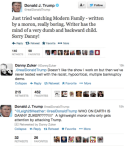
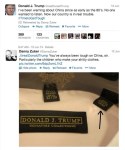
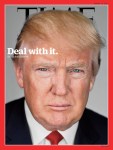
we’ve got Donald Trump, an openly racist/sexist/homophobic man who basically just wants to strip everyone of their rights





 Waiting for Winter