speaking to someone every single day can be pretty destructive because there’s gonna come a day where for the fist time you don’t speak at all and it’s the loneliest feeling in the world
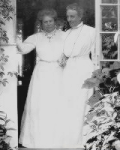
Boston marriages – romantic unions between women that were usually monogamous but not necessarily sexual – flourished in the late nineteenth century. The term was coined in New England, around the time that numerous women’s colleges such as Vassar, Smith, and Wellesley emerged.The concept of love between women was, of course, not new; “Boston marriage” and the very similar, earlier nineteenth-century term “romantic friendship” connote a type of relationship that dates back to at least the Renaissance in the West, and possibly further in the non-Western world. Boston marriages signified a new phenomenon, however, in that the women involved in them tended to be college-educated, feminist, financially independent, and career-minded – hardly the social norm among females of the day. These characteristics distinguish women bound together in Boston marriages from participants in the earlier romantic friendships.
Boston marriages were long-term and committed, and resembled traditional marriages in many ways. But remaining unattached to men gave women a chance to attain significant decision-making power over their own lives, power they would have forfeited to their husbands in a conventional marriage.The social acceptance of the Boston marriage was predicated upon the common assumption that the women involved did not practice any form of genital sexuality with each other. At the time, sexologists had not begun the regular use of pejorative terms such as “sexual inversion” and “perversion” to decry homosexuality, and the term “lesbian” was not yet in popular usage. Since nineteenth- and early twentieth-century women were often considered not to have strong sex drives – sex for them was supposedly a duty, and intended for procreation only – nothing was deemed wrong with women’s public displays of affection. Neither were their sharing households and even beds considered suspicious.Whether women in these romantic relationships did indeed refrain from sexual contact with each other is difficult to determine, but it is very likely that some, if not all, of Boston marriage couples were physically as well as emotionally involved. Their love letters to each other often indicate a passion that could hardly be considered platonic, and modern lesbian historians and writers have speculated that if members of Boston marriages were alive today, they would openly identify as lesbian.



















 Waiting for Winter