Gentrifiers focus on aesthetics, not people. Because people, to them, are aesthetics.
Proponents of gentrification will vouch for its benevolence by noting it “cleaned up the neighbourhood”. This is often code for a literal white-washing. The problems that existed in the neighbourhood – poverty, lack of opportunity, struggling populations denied city services – did not go away. They were simply priced out to a new location.
That new location is often an impoverished suburb, which lacks the glamour to make it the object of future renewal efforts. There is no history to attract preservationists because there is nothing in poor suburbs viewed as worth preserving, including the futures of the people forced to live in them. This is blight without beauty, ruin without romance: payday loan stores, dollar stores, unassuming homes and unpaid bills. In the suburbs, poverty looks banal and is overlooked.
In cities, gentrifiers have the political clout – and accompanying racial privilege – to reallocate resources and repair infrastructure. The neighbourhood is “cleaned up” through the removal of its residents. Gentrifiers can then bask in “urban life” – the storied history, the selective nostalgia, the carefully sprinkled grit – while avoiding responsibility to those they displaced.
Sarah Kendzior – The peril of hipster economics (x)
I get a little bit more exhausted every time I read a criticism of the West’s(and yes, in particular, America’s) handling of Daesh that basically amounts to “what we really need is more troops on the ground and airstrikes so surgical they could give a flea a prostate exam!”
Why in the hell would this suddenly work when it hasn’t been for so long? Just once I’d like to hear someone suggest a more civil approach. What if we took some of that money we’re spending on troops and airstrikes and put that money into these nations’ infrastructure instead?
It seems to me(and I admit I probably don’t know what I’m talking about) that signing up with a group like Daesh is a last resort sort of thing. I think most of these men are probably less concerned with the rhetoric and politics and more concerned with providing for their loved ones. The military is always a good career choice–your job is highly unlikely to be cut, you’ll be well provided for(meals, clothing, lodging, maybe healthcare, depending on who/where you’re serving), your family is usually well provided for, or it’s a way to have a meaningful death in a situation where an early death is more likely. I’d argue it’s not dissimilar to poor males in economically deprived areas of America enlisting with the military cause it’s the only gig in town that isn’t a benefits-free, part-time job at a grocery or convenience store.
If you had access to a job that would provide a secure, happy future for your family, without having to risk your life every day, wouldn’t that be more appealing? If these men had alternatives to joining Daesh, I think most would take those alternatives. Not all, of course, but a fair chunk. And with such a small organistion, that might be enough to stretch them too thin. Not to mention, it would hurt Daesh’s recruitment because instead of contributing to the chaos and destruction, the West would be seen contributing to the job market, and the people’s welfare. It’s harder to sell the elimination of an entity that isn’t bombing your home into an unrecognisable wasteland.
Basically, I don’t think these men want the fall of America as much as they wanted a steady job, and therefore the way to end the threat of Daesh is to provide a better alternative for its recruitment pool. Stop destroying and policing, and start rebuilding and providing. That’s just my relatively uninformed opinion.
I get a little bit more exhausted every time I read a criticism of the West’s(and yes, in particular, America’s) handling of Daesh that basically amounts to “what we really need is more troops on the ground and airstrikes so surgical they could give a flea a prostate exam!”
Why in the hell would this suddenly work when it hasn’t been for so long? Just once I’d like to hear someone suggest a more civil approach. What if we took some of that money we’re spending on troops and airstrikes and put that money into these nations’ infrastructure instead?
It seems to me(and I admit I probably don’t know what I’m talking about) that signing up with a group like Daesh is a last resort sort of thing. I think most of these men are probably less concerned with the rhetoric and politics and more concerned with providing for their loved ones. The military is always a good career choice–your job is highly unlikely to be cut, you’ll be well provided for(meals, clothing, lodging, maybe healthcare, depending on who/where you’re serving), your family is usually well provided for, or it’s a way to have a meaningful death in a situation where an early death is more likely. I’d argue it’s not dissimilar to poor males in economically deprived areas of America enlisting with the military cause it’s the only gig in town that isn’t a benefits-free, part-time job at a grocery or convenience store.
If you had access to a job that would provide a secure, happy future for your family, without having to risk your life every day, wouldn’t that be more appealing? If these men had alternatives to joining Daesh, I think most would take those alternatives. Not all, of course, but a fair chunk. And with such a small organistion, that might be enough to stretch them too thin. Not to mention, it would hurt Daesh’s recruitment because instead of contributing to the chaos and destruction, the West would be seen contributing to the job market, and the people’s welfare. It’s harder to sell the elimination of an entity that isn’t bombing your home into an unrecognisable wasteland.
Basically, I don’t think these men want the fall of America as much as they wanted a steady job, and therefore the way to end the threat of Daesh is to provide a better alternative for its recruitment pool. Stop destroying and policing, and start rebuilding and providing. That’s just my relatively uninformed opinion.
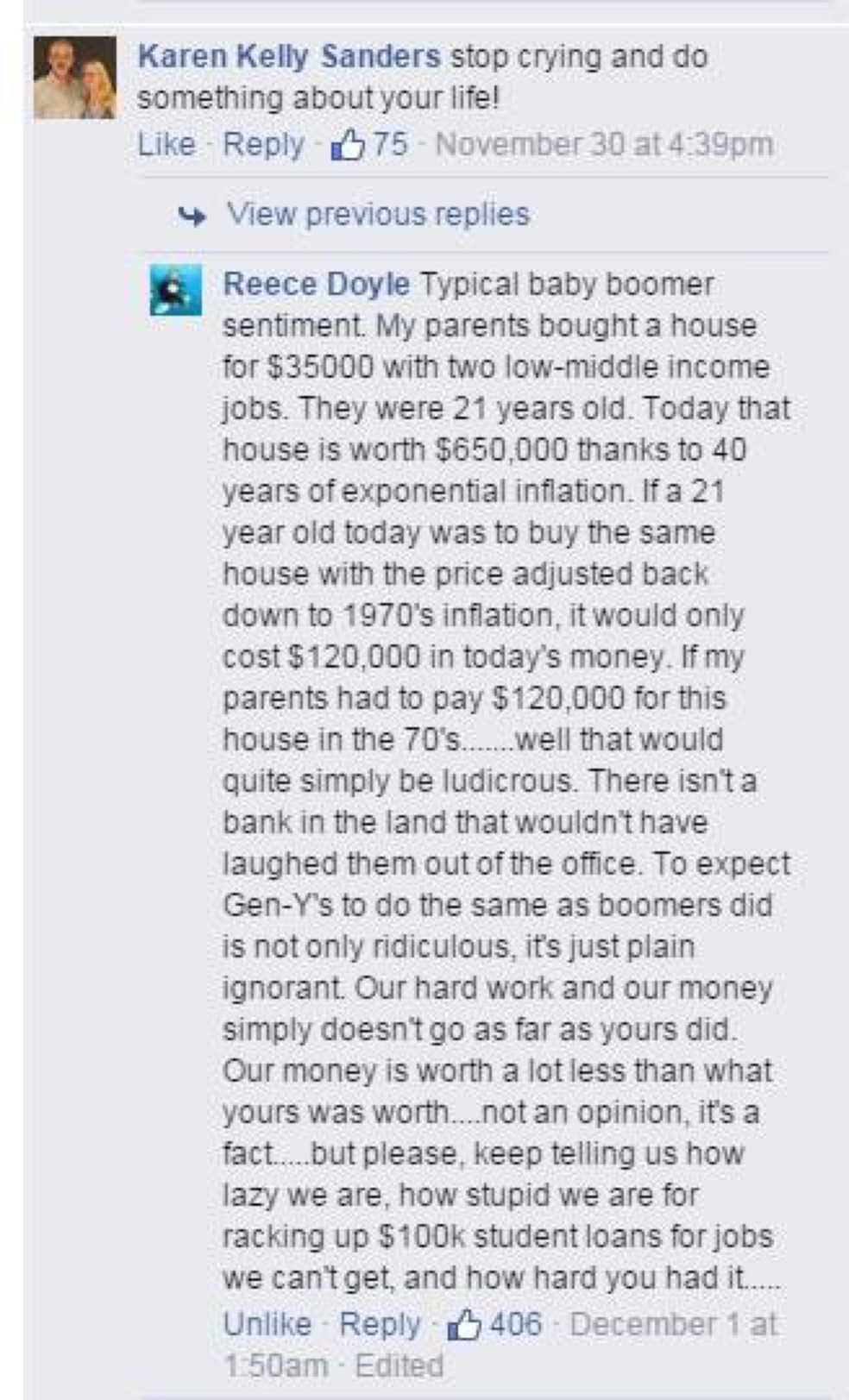
What 16 trillion dollar debt? I have no idea how my free stuff is going to appear. I just know I want it.
He’s raising taxes on the rich
He’s planning on stealing more from people… ok that makes sense. Just because *They* are rich doesn’t mean those people deserve to have more of their wealth stolen from them.
Yes because the wealthy billionaires that steal and undervalue labor, and companies that scapegoat paying taxes are really hurting
why even bring up the national debt if you don’t want people to pay taxes
I’m on the phone half asleep, but yeah, Thank you for real
I don’t think OP understands what rich people are. Like they literally won’t even notice the taxes. It will make no impact on the wealthy at all. You could take literally 50% of the income of the top 10% and they would have to make zero changes to their lifestyle.
Money to them is just a high score. They whinge when you take them down a bit but it makes literally no difference because they’re still winning the fucking game.
They do actually 100% deserve to have their money taken. People are starving to death because we think disability payments shouldn’t be enough to live on and minimum wage should be half of what you need to survive so yeah, I think millionaires and billionaires deserve to have a tiny fucking fraction of the money they could never spend in a fucking lifetime so I can fucking EAT AT ALL.
I also don’t think people understand actually how much a billion dollars is. Like. it’s such an enormous number.
We think of numbers that big like a set of stairs, a hundred, a thousand, ten thousand, a hundred thousand, a million, ten million, a hundred million, a billion.
With each jump just being another step on the staircase and not realising HOW FUCKING HUGE each step is, and how vast the gap is between each of them.
Aside from the fact that even a million dollars is far more than you need, a billion is disgusting excess. There is no conceivable way one person could justify needing a billion dollars when you know HOW MUCH that is.
To put it in perspective: a million seconds is 11 and a half days a billion seconds is 31 years and 9 months.
Another example would be Warren Buffett: He made $US12.7 billion in 2013. That was his yearly income, not his total worth. Just his income for 2013.
That’s $37 million per day; $1.54 million per hour; $25,694 per minute
How much do you get per hour? Is it enough to live on? the minimum wage in america is $15,080per year That man makes more money per minute just for being alive, even in his sleep than most of you do in an entire year.
also, just using seconds for reference again
15,080 seconds is just over 4 hours. 12.7 billion seconds is 402 years and 4 months.
Ok so I tried and the number differences broke the weird little graphing thing I was using.
so here we have one thousand (1,000) not showing one million (1,000,000) at one pixel
and one billlion (100,000,000) is the big pilon there.
I added fifty million in to show because that graph goes in increments of 50 million.
So how much is 50 million compared to a million though, it’s only one pixel?
so smol. But still we’re trying to get down to a thousand, (which is ten hundred-dollar-bills.)
So what does a million look like compared to a thousand?
oh. We broke it again. It will only go in 50 thousands. So we got to look at how big 50k is compared to our wad of hunjies.
ok.
This is why i like using the seconds instead of graphs… But I won’t give up here.
the reason it’s so so hard to process is because a BILLION is an enormous number. there comes a point with numbers where we can’t actually process them and its just like…a lot. And more than “a lot” is still “a lot”.
So we need visual representation. Lets use pennies (thanks megapenny)
Imagine a penny. Just one.
Ok, you get a thousand pennies a week, and you end up with 52 thousand in a year. If they were dollars that’s a nice paying wage.
with me?
now this is a thousand pennies.
this is 50 thousand pennies (1 square foot solid of pennies! COOOOL) It’s roughly how many pennies you would have in a year if you got a thousand pennies a week.
This is a million pennies
And this is a billion pennies
(Which is 5 schoolbuss sized blocks of solid pennies.)
that is so many.
.
The problem with numbers is that we see them written like this
1 100 1000 1000000 1000000000
And we kind of subconciously go “well… it’s only increasing a little at a time, like a staircase. When the progression is more like
And so on. which is not a staircase I want to climb because it starts off reasonable and then jumps to building size, then mountain size.
We ‘add a zero’ which is confusing because it’s timesing (x) not adding (+).
to make ten thousand dots, I would copy all the dots in my thousand pile, and paste them ten times. to make a hundred thousand, I would copy all the dots in my ten-thousand-dot pile and paste them ten times. thats what “times by ten” means.
That’s what adding a zero is, it’s multiplying (x) the last number we had by ten. (i also say timesing: as in copy and pasting it ten times) try it with a word document and see how many pages it takes to get you a billion dots, and how many it takes for 15 thousand (minimum wage anual)
hopefully this was at least somewhat useful.
Anyway, the point is that if we imagine them as dollar coins, and one square block is established as good enough to live by a year, there’s no reason one individual deserves 5 bus-worths.
I literally was about to google a visual representation of this and then THERE IT WAS IN THE POST
Seriously. It’s time for people to wake the fuck up. I’m sick of the godsdamned wilful blindness.
We had this conversation in my sociology class.
If you dont understand the wealth distribution in america, here you go
This is what OP and America thinks it is
What it actually is. Evaluate your life. Evaluate your income. This is why we need to take from the 1%
The 1% makes so much money its off the grid.
If you stack the 1% money next to eachother it would be like this
That 0% is your college students and people working fast food. Its below the poverty line. So taxing the 1% wont do shit to him.
This post got so incredibly awesome I’m almost glad OP posted it in the first place-almost
the graphs stappls posted is exactly what my econ instructor shared with my class three years ago. that graph is what made me even MORE pissed off about income distribution. icing and sprinkles on the god damn cake.
Timothy Snyder sounds more like an author of speculative fiction than a professor of history at Yale, as he sketches the broad strokes of not-too-distant land grabs by an industrialized China, who needs additional agricultural land to feed its populace, and might therefore follow Hilter’s path toward Lebensraum:
Climate change has also brought uncertainties about food supply back to the center of great power politics. China today, like Germany before the war, is an industrial power incapable of feeding its population from its own territory, and is thus dependent on unpredictable international markets.
This could make China’s population susceptible to a revival of ideas like Lebensraum. The Chinese government must balance a not-so-distant history of starving its own population with today’s promise of ever-increasing prosperity — all while confronting increasingly unfavorable environmental conditions. The danger is not that the Chinese might actually starve to death in the near future, any more than Germans would have during the 1930s. The risk is that a developed country able to project military power could, like Hitler’s Germany, fall into ecological panic, and take drastic steps to protect its existing standard of living.
How might such a scenario unfold? China is already leasing a tenth of Ukraine’s arable soil, and buying up food whenever global supplies tighten. During the drought of 2010, Chinese panic buying helped bring bread riots and revolution to the Middle East. The Chinese leadership already regards Africa as a long-term source of food. Although many Africans themselves still go hungry, their continent holds about half of the world’s untilled arable land. Like China, the United Arab Emirates and South Korea are interested in Sudan’s fertile regions — and they have been joined by Japan, Qatar and Saudi Arabia in efforts to buy or lease land throughout Africa.
Nations in need of land would likely begin with tactfully negotiated leases or purchases; but under conditions of stress or acute need, such agrarian export zones could become fortified colonies, requiring or attracting violence.
Connecting the dots: Africa becomes a huge agricultural colony of an industrialized China, land that they would depend on, and compete for against other powerful and wealthy nations. And those annoying Africans, trying to eke out a living at the margins? We know how this story ends.
When mass killing is on the way, it won’t announce itself in the language we are familiar with. The Nazi scenario of 1941 will not reappear in precisely the same form, but several of its causal elements have already begun to assemble.
It is not difficult to imagine ethnic mass murder in Africa, which has already happened; or the triumph of a violent totalitarian strain of Islamism in the parched Middle East; or a Chinese play for resources in Africa or Russia or Eastern Europe that involves removing the people already living there; or a growing global ecological panic if America abandons climate science or the European Union falls apart.
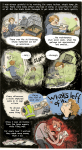
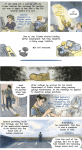
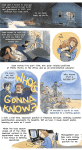
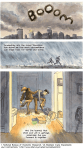
From graduation to garbage job (literally): One twentysomething’s struggle
Jackie Roche is a cartoonist, illustrator, and writer from New England, currently living in Minneapolis, MN. She specializes in nonfiction comics. For more of her work, visit jrocheworkshop.com or follow @jrocheworkshop on Twitter.
the narrative that centers veterans as the primary subjects of PTSD is a colonialist/imperialist narrative that values masculine warriors in service of empire. sexual and domestic violence, linked to patriarchy, is irrelevant.
It also ties into the runaway train that is military worship in the United States. See also: your Facebook feed, no doubt full of unverified claims that illegal immigrants, ‘welfare queens’, and junkies get priority for housing and benefits over wounded veterans.















 Waiting for Winter