A sad story from the Bray Animation Project about finding one of C. Allan Gilbert’s Silhouette Fantasies, all of which are lost films.
“While
researching the Bray films during a visit to the Library of Congress,
we made an exciting discovery. Located in a very large,
recently-received nitrate collection was a print labeled “Bray Gilbert
Silhouette – Decomp.” Upon taking the print out of its can, we quickly
identified it as Haunts For Rent.
Sadly, however, it was also immediately obvious that the print’s
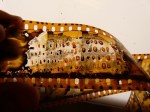
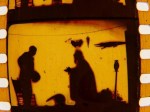
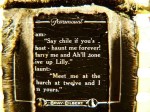
decomposition was in its later, quite severe stages. The photographs
below show some of the few frames that could be viewed from the
mostly-destroyed element. It is still fair to consider Haunts For Rent a lost film.”
I kind of wish disney’s ~weird period~ had lasted longer. Like all of a sudden we were getting these films like lilo & stitch and Atlantis and the emperor’s new groove and treasure planet and they were so fun and DIFFERENT. Just thinking about what the pitches for those movies had to have been like is so surreal?? A little blue criminal alien crash lands on a Hawaiian island and gets adopted by two sisters dealing with social services that teach him about the value of family. An Inca emperor gets turned into a llama and john goodman helps him get back to his palace and one of the bad guys talks to squirrels. Treasure island but in SPACE. Like, on the surface, the premise for these films seem so random but they all TOTALLY WORKED IN REALLY GREAT WAYS??? idk I just really miss that early 2000s spark of offbeat creativity in Disney’s timeline.
Okay but the history behind this is so interesting?
All these movies came from the Florida studio, which for a long time was a backup animation studio that did work the main Burbank studio didn’t have time for.
Then in 1996 Disney decided to focus all their energy on transitioning to 3D animation. They acquired Pixar and started working on A Bug’s Life.
They basically told the Florida studio (their only remaining full-time 2D animation studio) – “Eeeeeeh, do what you want.”
And the Florida studio, for the first time, got to produce feature films:
Then in 2004 Disney decided to stop producing 2-D feature films altogether. They closed down the Florida studio and laid off all the Florida Studio animators.
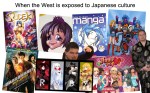
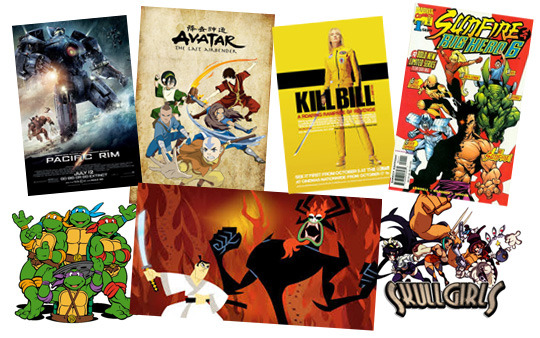
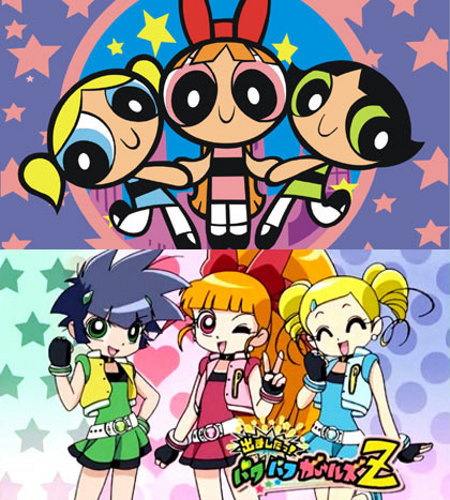
You’re comparing highly polished mainstream examples of iconic Japanese media to low budget, indie, and amateur american works. If you wanted to be fair the second image should look more like this:
The cultural exchange between American and Japanese art, particularly in animation, is hardly a one way streak.
Here we have Panty and Stocking, which boasts an artistic style that draws heavily upon modern western animation with it’s hard outlines and comical proportions. Shows like Dexter’s Laboratory barrow dynamic posses, dramatic framing, and highly expressive faces form anime and manga. Early anime and manga developed it’s distinct big eyes and childlike features by taking cues from western animation of the 20′s and 30′s
Betty Boop, in particular, was immensely popular in Japan. Her creators even made this short in appreciation of her Japanese fan-base.
WAIT I CAN ADD TO THIS ALREADY OBSCENELY LONG POST.
The entire Magical Girl genre is a big example of Western (primarily U.S.) and Japanese cultural exchange!
BeWitched (which was inspired by the 1940′s American movie “I Married a Witch”) was incredibly popular with young girls! This prompted the creation of the first popular Magical Girl Sally the Witch.
When the “Little Witch” Subgenre was big in the 70s the U.S. countered with animated Sabrina (from the Archie comics) which followed the same formula albeit with an older girl.
The 80s we start seeing more “flash of light” henshins/transformations being utilized along with the rise of the “Magical Idol” sub-genre in Japan it gave birth to shows like Creamy Mami and Magical Emi, in the U.S. it made way for Jem and the Holograms and She-Re Princess of Power (not a magical idol but still uses “flash of light” transformations). Jem was even a collab with U.S. doing the writing and Japan doing the animation!
The “Magical Warrior” sub-genre emerges in the 90s (even tho it has roots in the 70s with shows like Cutie Honey). This doesn’t catch on in America until the early 00′s with Atomic Betty (Canadian creation) and The Life and Times of Juniper Lee but we did see the start of it with the Canadian/Argentinian collab called Cyber Six. We also get W.I.T.C.H. and WINXClub in the early 00s from Italy which are both probably the most heavily influenced from Japan’s then current MG show structure.
Today we have Steven Universe, Bee and Puppycat, Star vs. the Forces of Evil, Lolirock, The Miraculous Ladybug, and if it gets picked up Twelve Forever which are all great Western MG shows that are influenced by Japan!
I could go on, I haven’t even scraped the ice berg on this! I have a whole hour panel I run on this subject called “Magical Girls from Around The World”
The point is the Magical Girl genre- and tbh animation in general- has been Japan and America (with some other Western countries thrown in) talking back and forth since the 60s. I leave you with probably the most direct influence:
can I add to this that Osamu Tezuka aka “the God of modern Manga”
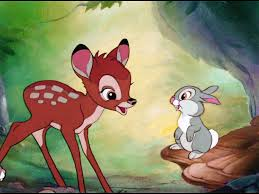
was inspired by Bambi
into deciding to give big eyes to his drawings so that they would look more expresive. He also remained a big fan of a certain Jewish American animator until his death, oh yeah this guy
Walt Disney himself was also intrested in Tezuka’s work, with Astroboy being one of his favorites. A similar case exists now between John Lasseter (Pixar and Disney fame) and Hayao Miyasaki (Studio Ghibli) who are big fans of each other’s work.
Japan and America are less of a competition to those who work on it and more of an inspiration, it is very often the fans and not the creators who create rivalries between people that would be friends in real life.








 Waiting for Winter