can someone explain to me

skiesovergideon:

Why it’s perfectly acceptable to read all day, to garden all day, to be at the pool all day, to work all day, to shop all day, to be out with friends all day, but the minute you decide to sit at a computer or console and game all day, suddenly you’re wasting your life?

It’s because older generations never played video games all day. They could see themselves doing all the rest of those things, so they’re acceptable activities.

mykicks:

The worst part of Pride each year is riding the subway late at night and seeing the gay guys, mostly the ones riding by themselves, slowly take off their rainbow stickers and beads and what-not in preparation for their walk alone in their neighborhood, doing their best to prevent the off-chance of being jumped. I saw one guy with a flag in his bag turn it upside down so it wouldn’t poke out.

So yeah, fuck that heterosexual pride day nonsense.

prokopetz:

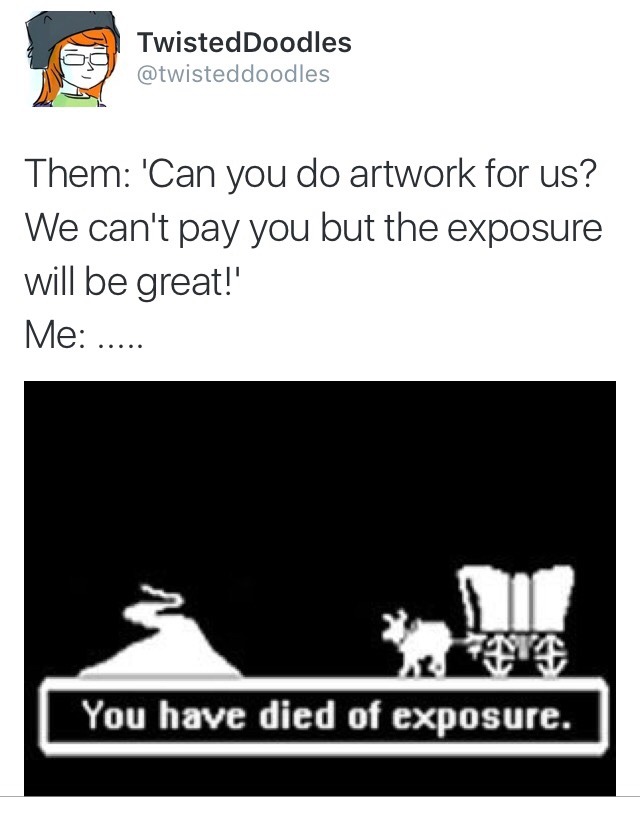
Honestly, a lot of my favourite elements of popular media have come about directly from writers being passive-aggressive.

Let me give you a classic example: Happy Days. For a lot of folks reading this post, it’s probably before your time, but you’re likely to at least be familiar with Fonzie, a supporting character played by Henry Winkler who ended up being so popular that he’s literally the only thing anybody remembers about the show.

Now, if you recognize the name, you might also know that one of Fonzie’s more notable quirks is that he tends to take his motorcycle with him everywhere – even indoors, including many places where there’s no obvious way for him to have gotten it there. What you might not know, however, is why the writers came up with this running gag in the first place.

Y’see, Fonzie was originally conceived as the “bad influence” character – the cool, dangerous bad boy. As part of that characterisation, the writers wanted to have him wear a leather jacket. (Because it was the 1970s, and that counted as edgy back then.) The network censors, however, objected, claiming that allowing him to wear the jacket would encourage juvenile delinquency and gang violence. (Again, it was the 70s.)

Eventually, the writers worked out a deal whereby they’d be allowed to have Fonzie wear the jacket – but only if he was riding or otherwise physically near his motorcycle, since a leather jacket is a common article of safety equipment when operating a non-enclosed vehicle, and we can’t let impressionable kids see somebody riding a motorcycle without proper safety equipment, can we?

Then they just wrote the motorcycle into every scene, regardless of whether it made sense or not, thereby allowing Fonzie to wear the jacket all the time.

clatterbane:

amoebagrrrl:

class-struggle-anarchism:

bloody british immigrants, taking jobs from hardworking europeans

Jamaican poet Kei Miller wrote a very interesting essay about the difference between the ‘immigrant’ and the ‘expat’ which concluded with this:

My problem with the word ‘immigrant’ is that I am only an immigrant because I am Jamaican and I am black. I watch shows on British television of Britons who want to move to ‘A Place in the Sun’ – to a small village in France, or Morocco, or even Jamaica. Their impulses are the same as the woman from Kingston or the man from Lagos who moves to the UK. No one migrates for a worse life. But when the British pack their bags and leave they become Expats, not Immigrants. What a thing! The same process. The same act. But different words. Immigrants are not equal to Expats. Immigration is a problem; expatriation isn’t. Immigrants are expected to always be grateful, but a little bit angry. Expats are allowed to just be – to simply enjoy this new country that they have chosen to live in, and which they might very well choose to leave. The expat is allowed to be a savvy, cosmopolitan person who simply lives somewhere else than the place in which they were born and they don’t have to appear on panel after panel angsting about it all.

See also: British Privilege, Entitlement & Exceptionalism in one photo.

And that’s just in reference to the rest of the EU.

(Coming from someone who is generally assumed to fall into the “expat” category, by virtue of having come from the US. So is my Swedish partner. AFAICT, a lot of it seems to depend on perceived standard of living in your country of origin.)

oh-snap-pro-choice:

reginaeinferos:

therevenantrising:

reginaeinferos:

therevenantrising:

reginaeinferos:

Nothing is going to change. Americans love their guns more than they love people and after Sandy Hook we decided that killing over 20 children was acceptable and not outrageous enough to make reasonable restrictions on guns. This is America, a country that has been around for 200 years, a superpower, a 1st world nation, and one of the wealthiest countries on the planet and we refuse to protect our own people. We respect guns more than we respect the lives of people. 

What specific gun control measures would you propose and how would they directly and effectively make society safer?

  • Absolutely get rid of all AR-15′s and the like.
  • Intense background and criminal background checks and anything violent automatically disqualifies you.
  • Make getting a gun/gun permit more like getting a driver’s license:
    • permit to learn
    • includes an exam with 18 or more questions on the policies, laws, and etc of guns and gun ownership
    • if you get more than 8 questions incorrect you must retake it.
  • 30 hours of practical experience at a gun range with a licensed teacher
  • Must take a 5 hour class on the dangers of guns and how to use them safely which will then yield you a certificate that grants you to take the practical exam and lasts for one year. If you don’t gain the license within the allotted year you must retake the class.
  • A practical exam with a licensed instructor who will grade you on various skills. If you pass you may be granted a permit on the weapon of your choice, the exams may differ on the type of firearm you want.
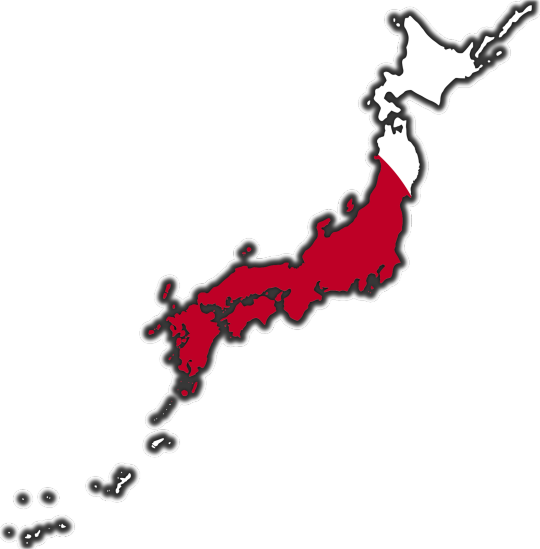
  • Follow the Japanese model where you must have two gun safes in different areas of the house, one to store the gun and one to store the bullets and you must provide the police with information on where those safes are.
  • No concealed carry and only handguns may be allowed to be out in public.
  • If transporting a weapon, it must be in the trunk of the vehicle, in a bag or some other case, safety on and unloaded and may not leave the vehicle until you are at the destination.
  • If you’re a hunter or some other gun hobbyist that requires a functional weapon other than a handgun then the gun must stay on the premises, whether that is a gun range or the Fish and Wildlife facility.
  • If you live in a rural area where police (and people, for that matter) are few and far between, something akin to a deer hunting rifle should provide plenty of protection from predators and poachers, you still have to follow the aforementioned steps.
  • This doesn’t cover everything but I think it’s a good place to start.

Can you show me evidence that this would directly and effectively create a safer society?

I have never laughed so hard at a gun law post. Like seriously, the evidence is in fucking reality. The proposed restrictions are just fucking logic.

archatlas:

Germany Around 1900: A Portrait in Colour

The turn of the 20th century seemed full of promise for Germany. The suburbs may have teemed with tenements to house the new industrial proletariat, but on spacious new avenues in the city centres, people strolled proudly past magnificent bourgeois residences. The economy was booming, the aristocracy and the military enjoyed unlimited social prestige, and most of the population revered the Kaiser.

Through some 800 color pictures, this book presents turn-of-the-century Germany as it liked to see herself: self-confident, glittering, patriotic but also with a belief in progress and – for those who could afford it – a cosmopolitan flair. As in the critically acclaimed An American Odyssey, the images are all rare examples of the historical photochrom process, a printing technique that allowed black-and-white photographs to be reproduced in colour.

Images and text via